Sewing Tools Black and White Line Art: A Practical Guide for Designers and Creators
In the realm of graphic design and creative production, clarity often outweighs complexity. Sewing Tools Black and White Line Art represents a specific aesthetic category that prioritizes clean lines, high contrast, and universal recognition. This style is not merely decorative; it serves as a functional asset for professionals who need to communicate ideas quickly and effectively without the distraction of color or texture. Whether you are a fashion designer creating technical flats, a blogger illustrating a tutorial, or a small business owner branding a boutique, these illustrations provide a versatile foundation for visual communication.
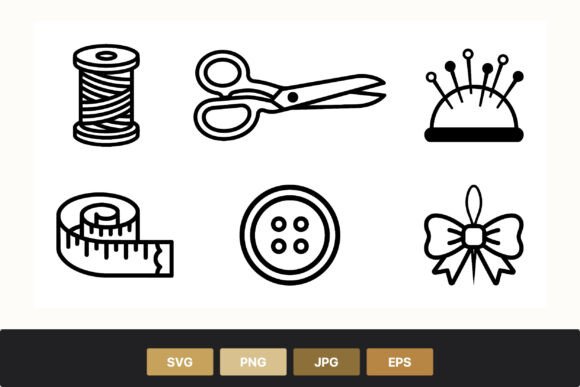
The value of this art style lies in its adaptability. By stripping away color and shading, the focus remains entirely on the form and function of the objects depicted. Common elements in such collections include scissors, measuring tapes, buttons, pin cushions with pins, thread spools, and decorative bows. These icons act as visual shorthand, instantly conveying the context of sewing, tailoring, or textile crafts to an audience. When integrated into a broader workflow, they streamline the design process, allowing creators to move from concept to execution with greater efficiency.
Understanding the Asset Package and File Compatibility
Before integrating any digital asset into a project, understanding the technical specifications is crucial for long-term usability. The Sewing Tools Black and White Line Art download package is structured to support a wide range of professional workflows. It arrives as a compressed ZIP file, a standard format that organizes multiple file types into a single, manageable unit. This organization prevents file loss and ensures that every necessary version of the artwork is accessible immediately upon extraction.
The inclusion of multiple formats within the package addresses different stages of the production pipeline:
- SVG (Scalable Vector Graphics): This is the most critical format for designers who require precision. SVG files are resolution-independent, meaning the line art can be scaled up to billboard size or down to a favicon without losing quality. Because the lines remain mathematically defined, users can edit stroke weights, change line colors, or modify individual paths using vector software like Adobe Illustrator or Inkscape.
- PNG (Portable Network Graphics): For web developers and social media managers, PNG files offer transparency. This allows the black line art to be placed over any background color or image without an unsightly white box surrounding it. This format is essential for quick integration into websites, blog posts, and digital presentations.
- EPS (Encapsulated PostScript): This format is the industry standard for professional print applications. If your workflow involves offset printing, large-format signage, or pre-press preparation, EPS files ensure that the vector data remains intact and compatible with high-end RIP (Raster Image Processor) systems.
- JPG (Joint Photographic Experts Group): While less flexible than vector formats, JPG provides a universally compatible option for sharing proofs, embedding in documents where editing is not required, or archiving visual references.
This multi-format approach eliminates the need for time-consuming conversion processes. Instead of spending hours re-exporting assets to fit a specific platform, the creator can select the appropriate file type directly from the folder structure, significantly reducing friction in the workflow.
Integration into Creative Workflows
The utility of Sewing Tools Black and White Line Art extends beyond simple decoration. It fits seamlessly into various phases of a project, from initial planning to final delivery. Understanding where these assets fit best can transform how a team approaches visual identity and content creation.
Pre-Production and Planning
During the conceptual phase, visual aids are necessary to align stakeholders and clarify ideas. When sketching out a layout for a sewing pattern booklet or designing a logo for a fabric shop, these line art icons serve as placeholders or mood board elements. They help define the tone of the brand before detailed illustration begins. For educators creating lesson plans, these icons can be used to outline key concepts in a syllabus or presentation, ensuring that the visual language matches the instructional content early on.
Execution and Production
Once the project moves into production, the versatility of the file formats becomes apparent. A web designer might use the PNG versions to create navigation icons for an e-commerce site selling sewing supplies. Meanwhile, a print designer working on packaging for a new thread brand would utilize the SVG or EPS files to ensure crisp edges when printed on varied materials, from glossy cardboard to matte fabric labels. The black and white nature of the art also simplifies the coloring process; if a brand needs to match specific Pantone colors, the vector lines can be filled with the exact hex codes required, maintaining consistency across all touchpoints.
Post-Production and Distribution
After a project is completed, these assets continue to provide value in marketing and archival efforts. The clean aesthetic of the line art translates well to social media graphics, where simplicity often leads to higher engagement. Bloggers can use the icons to break up text-heavy articles about garment construction, making the content more scannable and visually appealing. Furthermore, having a standardized set of icons ensures that future updates to a website or brochure maintain visual continuity without requiring new illustrations to be commissioned.
Practical Implementation Strategies
To maximize the return on investment for these digital assets, it is important to adopt a systematic approach to their usage. Random application of graphics can lead to a disjointed visual identity, whereas strategic implementation enhances professionalism and clarity.
Consistency in Stroke Weight
One of the primary advantages of vector-based line art is the ability to control stroke weight. However, mixing different thicknesses can look unprofessional. When integrating Sewing Tools Black and White Line Art into a larger design system, ensure that the stroke width of the icons matches the typography or other graphical elements. Most vector editors allow you to adjust the global stroke settings, ensuring that the scissors, measuring tape, and button icons all share a uniform visual weight.
Contextual Usage
Consider the environment where the icon will appear. High-contrast black and white works exceptionally well on light backgrounds, but may need adjustment for dark themes. If using the PNG files on a dark background, consider inverting the colors in your design software so the lines appear white against the dark field. This maintains readability and preserves the minimalist aesthetic.
Organizing Assets for Team Collaboration
For teams or agencies, organization is key to efficiency. Create a dedicated folder structure for the extracted ZIP contents. Separate the editable vector files from the rasterized versions. Label folders clearly by project or client name. This practice prevents version control issues and ensures that anyone on the team can locate the correct file format for their specific task without confusion.
Factors Influencing Quality and Longevity
When selecting or utilizing line art assets, several factors determine their long-term viability in a portfolio or business toolkit. Quality control begins with the source file. High-quality vector art should have smooth curves and closed paths, which prevents rendering errors when scaled. The Sewing Tools Black and White Line Art collection described here meets these standards, offering clean geometry that holds up under scrutiny.
Usability is another critical factor. An asset is only as good as its accessibility. The provision of multiple formats in a single download removes barriers to entry for users with varying levels of technical expertise. A freelancer using basic photo editing software can still utilize the PNG files, while a senior graphic designer can manipulate the SVG files for complex layouts. This flexibility ensures that the asset remains useful even as software tools and project requirements evolve.
Furthermore, the timeless nature of black and white line art contributes to its longevity. Unlike trends in color palettes or illustrative styles that may date quickly, simple line drawings remain relevant. A logo or icon created today using these assets will likely look just as professional five or ten years from now. This makes them a cost-effective choice for businesses looking to establish a lasting brand identity without frequent redesigns.
Conclusion on Workflow Efficiency
The integration of Sewing Tools Black and White Line Art into a creative workflow is more than a stylistic choice; it is a strategic decision aimed at improving efficiency, consistency, and visual communication. By providing a comprehensive suite of file formats, the asset package supports the diverse needs of modern creators, from the initial planning stages through to final distribution. Whether used to illustrate a technical manual, brand a small business, or enhance educational content, these icons offer a reliable, scalable, and aesthetically pleasing solution. By focusing on practical implementation and maintaining strict quality control, professionals can leverage these tools to produce work that is both visually striking and functionally robust.