Mastering the Timeless Appeal of Black and White Line Art with Hearts and Decorative Elements
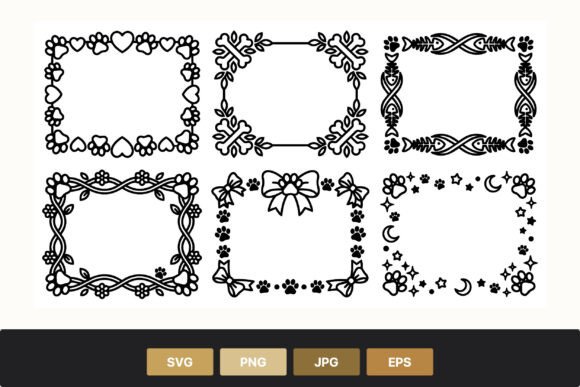
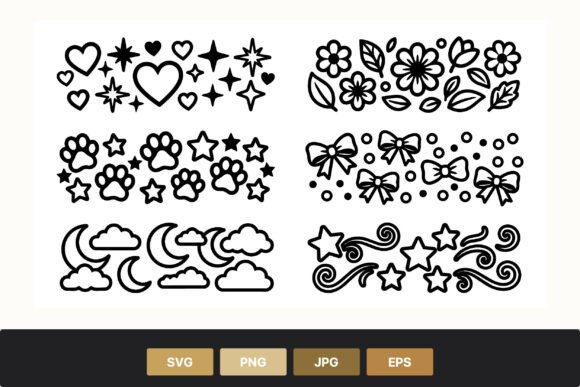
In the vast landscape of digital design, where vibrant gradients and photorealistic textures often dominate, there is a quiet elegance found in simplicity. Black and white line art has experienced a significant resurgence, captivating designers, crafters, and educators alike. At the heart of this trend lies a specific aesthetic: clean outlines featuring universally loved symbols like hearts, stars, paw prints, flowers, leaves, bows, moons, clouds, and decorative swirls. This style transcends fleeting trends, offering a versatile toolkit for creative expression that fits seamlessly into modern life, from classroom activities to professional branding.
The Enduring Power of Simple Outlines
To understand why this specific collection of imagery resonates so deeply, we must first look at the fundamentals of line art. Unlike complex illustrations filled with shading and color, line art relies entirely on the contour and flow of a single stroke. When rendered in black and white, these images achieve a level of clarity that is both striking and adaptable. The absence of color forces the viewer to focus on the shape and form, making the subject matter instantly recognizable.
This simplicity is not a limitation; it is a strategic advantage. In an era of information overload, clear visual communication is paramount. A simple outline of a heart or a paw print communicates emotion or identity without distraction. Whether used in a logo for a pet adoption shelter, a coloring book for children, or a subtle watermark on a business card, these elements provide immediate visual impact. They bridge the gap between abstract concepts and tangible understanding, serving as a universal language of design.
Decoding the Symbolism: From Hearts to Swirls
The collection of motifs available in this genre is carefully curated to cover a wide spectrum of human experience and natural beauty. Each element carries its own weight and significance:
- Hearts: The most iconic symbol of love and affection. In line art, they range from anatomical accuracy to stylized, geometric interpretations, making them perfect for romantic designs, Valentine's Day projects, or expressions of care in healthcare settings.
- Paw Prints: Representing loyalty, companionship, and the animal kingdom. These are essential for pet-related businesses, veterinary clinics, and wildlife conservation campaigns.
- Flowers and Leaves: Symbols of growth, nature, and renewal. Their organic curves contrast beautifully with sharper geometric shapes, adding a touch of softness to any composition.
- Stars, Moons, and Clouds: Celestial elements that evoke wonder, dreams, and the night sky. They are frequently used in children's decor, spiritual designs, and whimsical storytelling.
- Bows and Decorative Swirls: These elements add a sense of celebration and movement. Bows suggest gifts and special occasions, while swirls guide the eye through a layout, creating dynamic flow.
When combined, these elements create a cohesive visual vocabulary. A designer might pair a moon with a cloud and a star to create a nursery theme, or combine hearts with flowers for a wedding invitation suite. The flexibility of these simple outlines allows for endless combinations without visual clutter.
Practical Relevance in Modern Workflows
The true value of a high-quality line art collection lies in its versatility across different industries and applications. In today's fast-paced creative economy, having assets that are ready to use can significantly streamline production workflows.
Educational and Therapeutic Applications
In education, black and white line art serves as a foundational tool. Teachers use these images to create worksheets, flashcards, and activity books. Because the lines are clean and uncluttered, they are ideal for coloring pages, which help children develop fine motor skills and color recognition. Furthermore, in therapeutic settings, coloring intricate line art is a proven method for stress reduction and mindfulness. The act of filling in the spaces within a heart or a flower pattern encourages focus and relaxation.
Business and Branding
For small business owners and entrepreneurs, these graphics offer a cost-effective way to elevate brand identity. A boutique coffee shop might use a simple leaf outline on their packaging to emphasize organic ingredients. A graphic designer might use a decorative swirl to frame a text logo. Because the images are in black and white, they adapt easily to various color schemes. A client can take a black outline of a bow and recolor it to match their corporate palette instantly, ensuring brand consistency without needing to commission custom artwork from scratch.
Crafting and DIY Projects
The rise of the "maker" movement has placed a premium on scalable vector graphics. Hobbyists using laser cutters, vinyl cutters, or Cricut machines rely heavily on precise line art. The ability to scale an image up for a large wall decal or down for a tiny keychain without losing quality is crucial. This is where the technical specifications of the file formats become vital.
Understanding the Technical Package: Why Format Matters
A common misunderstanding among beginners is assuming that one image format fits all purposes. However, professional design requires a variety of tools for different jobs. That is why a comprehensive download package typically includes a compressed ZIP file bundling multiple formats: SVG, PNG, EPS, and JPG. Understanding the role of each ensures you get the best results for your project.
- SVG (Scalable Vector Graphics): This is the gold standard for web and cutting machines. SVG files are mathematical descriptions of shapes, meaning they can be resized infinitely without pixelation. If you need to edit the individual lines of a heart or change the thickness of a swirl, SVG is the format you need. It is lightweight and compatible with most modern browsers and design software.
- PNG (Portable Network Graphics): Ideal for digital overlays and web use, PNG files support transparent backgrounds. This allows you to place a line art flower over a colored background or a photograph without an unsightly white box around it. While raster-based (made of pixels), high-resolution PNGs are perfect for screen displays and social media graphics.
- EPS (Encapsulated PostScript): This is the preferred format for professional print applications and high-end design software like Adobe Illustrator. EPS files ensure that your line art remains crisp when printed on large banners, business cards, or packaging. They are robust and maintain compatibility across different operating systems and older design programs.
- JPG (Joint Photographic Experts Group): While less flexible than vectors, JPG files are universally compatible. They are excellent for sharing previews, embedding in documents, or using in contexts where transparency isn't required. They offer a balance between file size and image quality for standard viewing.
By providing all these formats in a single ZIP bundle, creators ensure maximum flexibility. You aren't forced to convert files manually, risking quality loss or formatting errors. Instead, you have the right tool ready for every stage of your workflow, from initial concept to final production.
Building a Broader Creative Perspective
Embracing black and white line art is more than just downloading a set of files; it is about adopting a mindset of minimalism and intentionality. In a world saturated with noise, these simple outlines remind us that beauty often lies in what we leave out rather than what we add. They encourage designers to think critically about composition, balance, and negative space.
Whether you are a seasoned graphic designer looking to expand your asset library, a teacher preparing engaging materials for students, or a hobbyist starting a new crafting venture, these collections offer a gateway to creativity. The combination of beloved symbols—hearts, stars, paw prints, and more—with professional-grade file formats empowers you to bring your ideas to life with confidence and precision.
As you explore the possibilities of these decorative swirls and celestial bodies, remember that the best designs are those that communicate clearly and connect emotionally. With the right resources and an understanding of how to utilize them, the potential for innovation is limitless. Start with a simple line, and let your imagination fill in the rest.