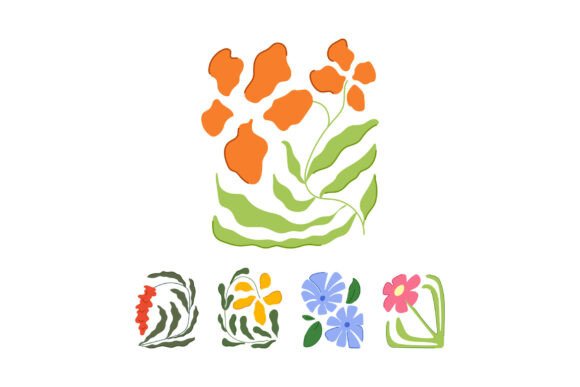
Abstract Floral Compositions and Organic Forms: A Strategic Asset for Modern Design
In the contemporary visual landscape, the intersection of nature and abstraction offers a powerful toolkit for communicators and creators. Abstract floral compositions and organic shapes are no longer merely decorative elements; they have evolved into strategic assets that can define brand identity, enhance user experience, and communicate complex values without relying on literal imagery. For entrepreneurs, marketers, and designers, understanding how to leverage these forms is essential for creating work that resonates with modern audiences who crave authenticity balanced with sophistication.
The shift away from rigid, geometric minimalism toward softer, more fluid aesthetics reflects a broader cultural desire for connection and calm. By utilizing modern botanical designs, professionals can tap into this psychological undercurrent. However, the effective use of these elements requires more than aesthetic preference; it demands a clear understanding of context, audience, and purpose. This article explores how to integrate abstract florals and organic shapes into your creative projects with intention, ensuring they serve your broader business and communication goals.
Defining the Visual Language of Organic Abstraction
To use these elements effectively, one must first distinguish between literal botanical illustration and abstract interpretation. Literal flowers carry specific cultural and seasonal baggage—roses imply romance, lilies suggest mourning or purity. In contrast, abstract floral compositions strip away specific identification, focusing instead on form, flow, and color. An organic shape might suggest the curve of a leaf or the unfolding of a petal without depicting a specific species. This ambiguity is its greatest strength.
When you employ organic and abstract flower and leaf shapes, you invite the viewer to engage emotionally rather than intellectually categorizing the image. This approach is particularly valuable in branding and high-level graphic design, where the goal is often to evoke a feeling—such as growth, harmony, or innovation—rather than to sell a specific product feature. The lack of specificity allows the design to remain timeless and adaptable across various mediums, from digital interfaces to large-scale textile patterns.
Strategic Applications in Branding and Communication
For decision-makers and brand strategists, the choice of visual language directly impacts market positioning. Incorporating modern botanical designs can signal several key brand attributes:
- Sustainability and Ethics: Even if your product is not directly related to nature, organic shapes can subtly communicate a commitment to environmental responsibility and natural processes.
- Human-Centricity: In tech and finance, industries often dominated by cold data and rigid structures, soft organic forms can humanize the brand, making it appear more approachable and empathetic.
- Creativity and Innovation: Abstract compositions suggest thinking outside the box. They imply a departure from tradition and an embrace of fluid, dynamic solutions.
Consider the application in textile patterns for corporate environments or hospitality sectors. A hotel chain aiming to provide a restorative experience might choose large-scale, muted abstract leaf patterns for their upholstery and wall coverings. This choice supports the operational goal of guest relaxation more effectively than busy, geometric prints or literal floral wallpapers, which can feel dated or overly domestic.
Enhancing Productivity and Focus Through Environmental Design
Beyond branding, the strategic use of abstract floral compositions and organic elements extends to interior design and workspace planning. Research in environmental psychology suggests that exposure to biophilic design elements—patterns that mimic nature—can reduce stress and improve cognitive function. However, literal representations of nature can sometimes be distracting.
Abstracted versions offer a middle ground. They provide the calming effect of natural forms without the visual noise of detailed realism. For educators and office managers, integrating these designs into background materials, presentation slides, or physical decor can create an environment conducive to deep work and learning. The key is subtlety; the design should support the activity, not compete with it.
Practical Guidelines for Implementation
Integrating these elements into your projects requires a disciplined approach to avoid clutter and maintain professionalism. Here are practical steps for thoughtful implementation:
- Define the Emotional Objective: Before selecting a pattern, ask what emotion you want to evoke. Do you need energy? Use bold, contrasting colors in dynamic, swirling leaf shapes. Do you need calm? Opt for monochromatic, slow-moving curves with ample negative space.
- Consider Scale and Repetition: In graphic design and textile patterns, scale dictates impact. Large-scale abstract florals make a bold statement suitable for hero images or feature walls. Small-scale repetitions work better for backgrounds, packaging, or subtle textures. Ensure the repetition feels natural and not mechanically rigid.
- Balance with Structure: Organic shapes thrive when contrasted with structured elements. Pair fluid, abstract leaves with clean typography and grid-based layouts. This tension between the organic and the geometric creates visual interest and maintains readability.
- Limit the Palette: Abstract designs can quickly become chaotic if too many colors are used. Stick to a curated palette that aligns with your brand guidelines. Often, two or three colors plus neutrals are sufficient to create depth and sophistication.
Risks of Unintentional Use
While versatile, abstract floral compositions and organic shapes are not a universal solution. Using them without clear strategic intent can lead to several pitfalls:
Loss of Clarity: If the abstraction is too extreme, the connection to nature may be lost entirely, leaving viewers confused about the brand’s message. Conversely, if the shapes are too literal, they may fail to offer the modern, sophisticated edge that abstraction provides.
Cultural Misalignment: Certain floral motifs carry heavy cultural symbolism. While abstraction mitigates this, some forms may still resonate with specific cultural associations. Always test designs with diverse focus groups to ensure the intended message is received correctly.
Overuse and Trend Fatigue: Like any design trend, organic abstraction can become saturated. If every competitor in your niche adopts similar soft, pastel botanical backgrounds, your brand risks blending in rather than standing out. To counter this, push the boundaries of the style—experiment with darker palettes, sharper edges, or unconventional compositions to maintain distinctiveness.
Long-Term Value and Adaptability
One of the most compelling arguments for investing in high-quality modern botanical designs is their longevity. Unlike trendy geometric patterns or pop-culture references, organic forms are rooted in the fundamental structures of the natural world. They do not go out of style because they are perennial. This makes them a safe long-term investment for core brand assets, such as logos, packaging structures, and architectural elements.
Furthermore, these designs are highly adaptable across platforms. A single abstract floral composition can be scaled down for a mobile app icon, expanded for a billboard, printed on fabric, or animated for a digital campaign. This versatility reduces the need for constant redesigns, offering operational efficiency and cost savings over time.
Making Better Design Decisions
Ultimately, the decision to use abstract floral compositions and organic shapes should be driven by strategy, not just aesthetics. Ask yourself: Does this design solve a communication problem? Does it align with our brand’s core values? Will it resonate with our target audience’s current psychological needs?
By approaching these elements with the same rigor applied to business planning and market analysis, you transform them from mere decoration into powerful tools for engagement. Whether you are designing a website, curating a retail space, or developing a new product line, let the fluidity of organic forms guide you toward solutions that are both beautiful and functional. The goal is not just to create something that looks good, but to create something that works—enhancing clarity, fostering connection, and driving results.
For creators and leaders alike, mastering the nuance of organic and abstract flower and leaf shapes is a step toward more mature, impactful design practice. It requires observation, restraint, and a deep understanding of the human response to form. When executed with precision, these designs do more than fill space; they elevate the entire user experience, leaving a lasting impression of quality and thoughtfulness.